
- Gift Cards
- Plant Library
-



Plant Library
Height: 4 feet
Spread: 4 feet
Sunlight:


Hardiness Zone: (annual)
Other Names: Cocoyam, Dasheen, Taro
Description:
Best grown in fertile, organically rich soil; in colder climates it can be removed after first frost and stored in a cool dry place until spring; huge foliage is stunning as a garden accent
Ornamental Features
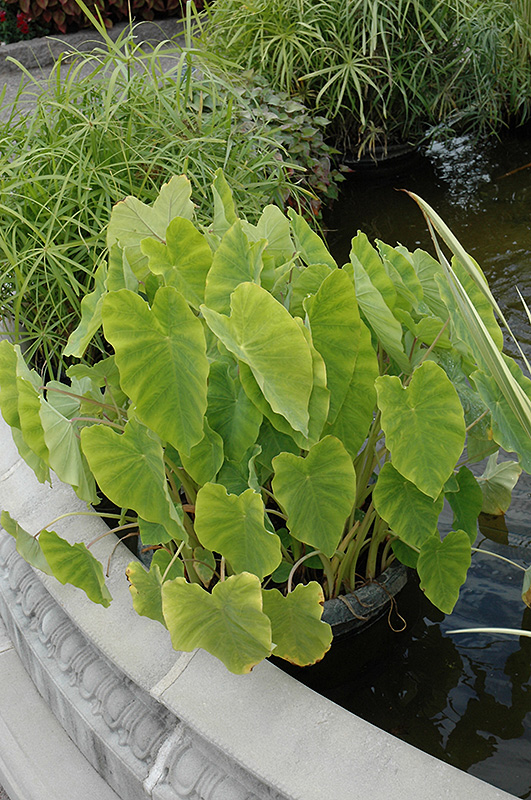
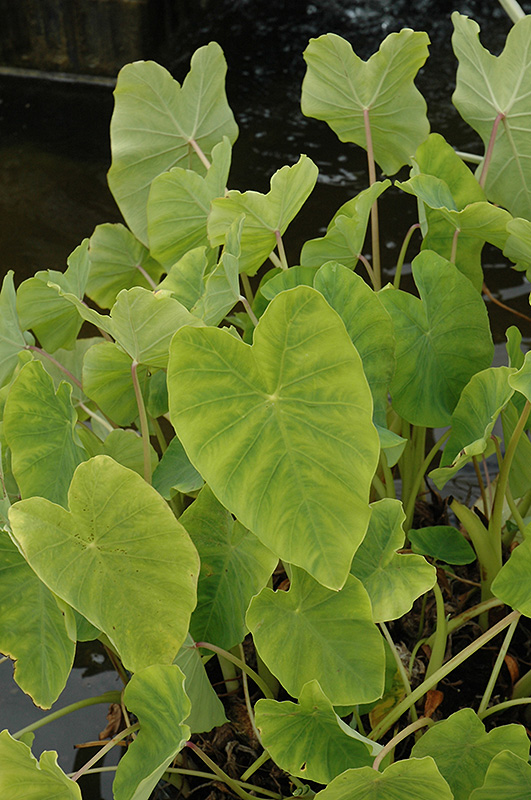
Elephant Ear is primarily valued in the landscape or garden for its cascading habit of growth. It features subtle buttery yellow tubular flowers along the stems in mid summer. Its attractive enormous heart-shaped leaves remain green in colour throughout the season.
Landscape Attributes
Elephant Ear is an open herbaceous tropical plant with a shapely form and gracefully arching foliage. Its wonderfully bold, coarse texture can be very effective in a balanced garden composition.
This is a relatively low maintenance plant, and should be cut back in late fall in preparation for winter. It has no significant negative characteristics.
Elephant Ear is recommended for the following landscape applications;
- Accent
- Mass Planting
- General Garden Use
- Container Planting
Planting & Growing
This plant is native to the tropics and prefers growing in moist environments with evenly warm conditions all year round. In our climate, it is usually grown as an outdoor annual in the garden or in a container. If you want it to survive the winter, it can be brought in to the house and provided with special care, and then returned to the garden the following season. In its preferred tropical habitat, it can grow to be around 4 feet tall at maturity, with a spread of 4 feet. However, when grown as an annual or when overwintered indoors, it can be expected to perform differently, and its exact height and spread will depend on many factors; you may wish to consult with our experts as to how it might perform in your specific application and growing conditions.
This plant does best in full sun to partial shade. It is quite adaptable, prefering to grow in average to wet conditions, and will even tolerate some standing water. It is not particular as to soil pH, but grows best in rich soils. It is somewhat tolerant of urban pollution. This species is not originally from North America. It can be propagated by division.
Elephant Ear is a fine choice for the garden, but it is also a good selection for planting in outdoor pots and containers. Because of its height, it is often used as a 'thriller' in the 'spiller-thriller-filler' container combination; plant it near the center of the pot, surrounded by smaller plants and those that spill over the edges. It is even sizeable enough that it can be grown alone in a suitable container. Note that when growing plants in outdoor containers and baskets, they may require more frequent waterings than they would in the yard or garden. Be aware that in our climate, most plants cannot be expected to survive the winter if left in containers outdoors, and this plant is no exception. Contact our experts for more information on how to protect it over the winter months.
-- THIS IS A TROPICAL PLANT AND SHOULD NOT BE EXPECTED TO SURVIVE THE WINTER OUTDOORS IN OUR CLIMATE --


 Characteristics


 Applications


 Features & Attributes
 Stylist Appointments
 Private Plant Workshops for Groups
 Custom Arrangement Request
 Planting & Installation Services
 Commercial Landscaper Application
 Real Estate Client Arrangements
 Seminars
 Spring Photo Sessions
 Creator Program
 Rick's Top Products
 All Jewelry
 Handbags & Wallets
 Summer Drink Essentials
 All Oils & Vinegars